Service
Metal Roof Installation
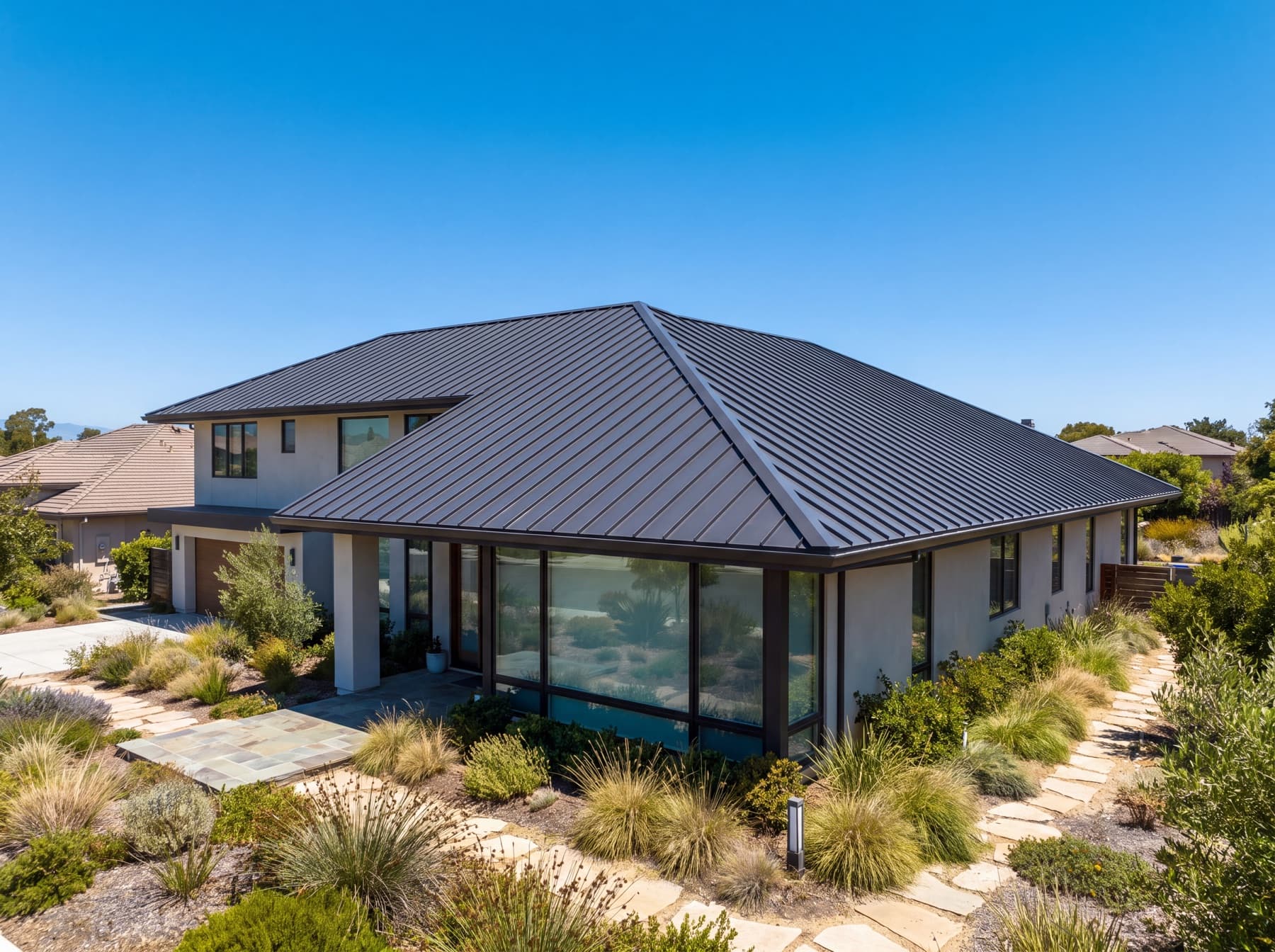
Standing-seam and metal shingle roof installation for homeowners who want a longer-lasting, more storm-resistant roofing system than standard asphalt shingle.
Metal roofing costs more upfront than asphalt shingles, but that comparison alone misses the point — a metal roof installed today can realistically outlast two or three shingle roofs over the same span of years. Once you factor in how long you plan to own the home, the real cost picture looks different than the sticker price suggests.
What a Metal Roof Costs
The average metal roof runs $5,500 to $15,500 installed, with most homeowners landing just under $10,500. Material choice drives most of that range:
| Material | Cost per sq ft |
|---|---|
| Corrugated metal | $4–$7 |
| Metal slate (stone-coated) | $5–$12 |
| Zinc | $6–$10 |
| Steel | $6–$16 |
| Standing seam (aluminum or steel) | $8–$14 |
| Aluminum | $8–$12 |
| Copper | $16–$30 |
Labor accounts for as much as two-thirds of the total — more than a typical shingle installation — since metal roofing calls for specialized tools and precise seaming or fastening, particularly on steep or complex roof lines. Pitch, whether the existing underlayment is compatible, and hidden versus exposed fasteners all affect the final number as well.
Key takeaway
Standing seam metal typically costs 2 to 3 times more than architectural shingles to install, but lasts roughly twice as long — 40 to 70 years versus 25 to 30. Whether that math works in your favor mostly comes down to how long you plan to stay in the house.
Metal vs. Asphalt Shingle
Both materials do the job well — the right choice usually depends on your timeline more than one being objectively better:
- Lifespan. Standing seam metal commonly reaches 40 to 70 years with minimal maintenance. Architectural shingles run 25 to 30 years under reasonable conditions.
- Upfront cost. Shingles cost less to install, often by 2 to 3 times — a real factor if you're not planning to stay long-term or working within a tighter budget.
- Storm and wind performance. Interlocking metal panels handle high winds better and shed snow more effectively, with fewer exposed seams for water to work its way through.
- Noise and thermal movement. Uninsulated metal is noticeably louder in heavy rain, and it expands and contracts more with temperature swings — both manageable with correct installation, but worth knowing beforehand.
- Maintenance. Once properly installed, metal requires very little upkeep. Exposed-fastener systems are the exception — the gaskets around each fastener compress and crack over time and eventually need attention, which is part of why standing seam is usually the better residential choice over corrugated panels.
For a home you plan to own for decades, or one in a storm-prone area, the higher upfront cost of metal tends to pay off over the roof's full life. For a shorter ownership window, shingles remain the more practical option.
The Installation Process
Metal roofing goes on differently than shingles, which is part of why it takes a crew that specializes in it:
- Measurement and panel fabrication. Standing seam panels are often custom cut or fabricated to fit each roof plane exactly rather than pulled from standard stock sizes, which cuts down on seams and waste.
- Underlayment compatibility check. Metal needs underlayment rated for the higher heat and different moisture behavior of a metal surface — reusing shingle-rated underlayment beneath metal panels is a common shortcut that shortens the roof's effective life.
- Panel installation and seaming. Panels go up in order and get seamed (standing seam) or fastened (exposed-fastener systems) to the manufacturer's spec, with attention paid to overlap and expansion allowance so panels can move with temperature swings without stressing the seams.
- Trim, flashing, and penetration detail work. Chimneys, vents, and skylights each need custom-fitted metal flashing — this is where installation quality shows up most, since these points carry the highest risk for a future leak.
- Final inspection. Seams, fasteners, and flashing are checked before the crew leaves, since a metal roof installed correctly should need very little attention for decades afterward.
Common Myths About Metal Roofs
A few misconceptions come up often enough to address directly. Noise: a properly installed metal roof over solid decking and underlayment isn't meaningfully louder in rain than a shingle roof — the "tin roof in a storm" reputation mostly traces back to older exposed-fastener installs over open framing with no solid deck underneath. Lightning: metal roofing doesn't attract lightning any more than other materials; if anything, its non-combustibility is a safety advantage rather than a risk. Cost over time: the higher sticker price is real, but so is the lower total cost of ownership for anyone staying in the home long enough to avoid a second or third shingle replacement over the same span of years.
Where We Offer Metal Roof Installation
What Homeowners Look For
A few things customers consistently tell us matter most.
Frequently Asked Questions
Ready to get this fixed?
Call now or request a free estimate — we'll get back to you fast.